Why Political Theater Matters More Than Ever
Political theatre is an extremely important tool today; it will help us develop compassion, facilitate discussions among citizens, and promote citizen participation. This piece of writing explores why works such as The Adult in the Room can lead to viewers looking behind news headlines, viewing situations in many different ways, and engaging in discussions regarding leadership, personal accountability and our collective human existence.
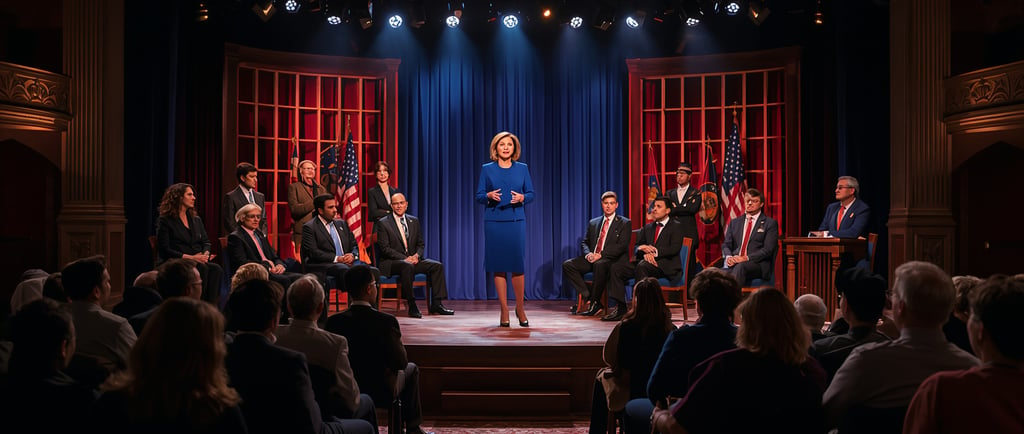
Political Theater has traditionally functioned as a societal mirror. It shows us, our successes, our hardships, our contradictions, and our dreams. From Greek tragedy to current day productions based off of today’s top headlines, theater has been a powerfully charged environment for audiences to grapple with the hard questions and to question the complexities of being human.
With the divide growing wider and faster than ever, the constant barrage of news, and the increased polarization, there is a rapidly decreasing amount of opportunities to take a step back and engage with an idea that inspires thought and imagination. That is where political theater steps into action.
The Adult in the Room is a product of this history.
Although, at its core this production is not just about politics; it is about leadership. It is about accountability. It is about the people who are responsible for making decisions during times of uncertainty and the sacrifices they make, often in anonymity. By portraying the life and leadership of Nancy Pelosi in this theatrical presentation, the playwright encourages the audience to go past the headlines and look at the individual behind the public figure.
One of the best things about theater is its ability to evoke feelings of empathy.
When you attend a theater performance, you agree to be part of a collective experience. For two or three hours you put everything else out of mind and are immersed in someone else's point of view. You see fear, motivation, success, and failure happen right before your eyes. Social media posts and news clips don't allow you to react immediately; instead they invite you to reflect.
Political theater specifically forces you to evaluate your own preconceived notions that you probably didn't know you had. It asks tough questions and doesn't give you an easy answer.
What makes someone an effective leader?
How can you stay true to yourself and your beliefs when forced to negotiate and compromise?
Do people with different viewpoints believe others' humanity?
These questions reach much further than just one specific politician or event. These are the questions that are asked by families, employers, students, and communities across America.

Theater teaches us that leadership isn't always black-and-white.
We've learned throughout history that leaders are almost always reduced to headlines and talking points. But behind every decision made in the public eye lies a person trying to balance multiple responsibilities, relationships, expectations, and repercussions. The stage gives those people back their complexity and nuances.
It also reminds audiences to seek nuance.
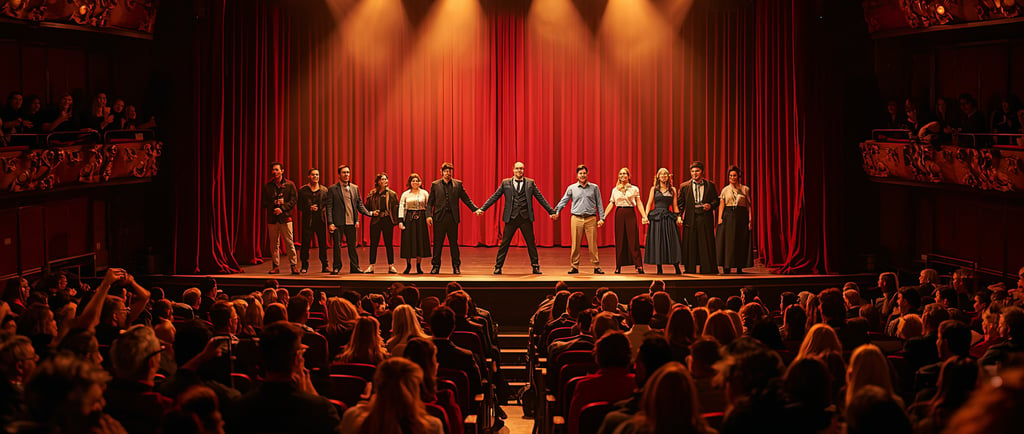
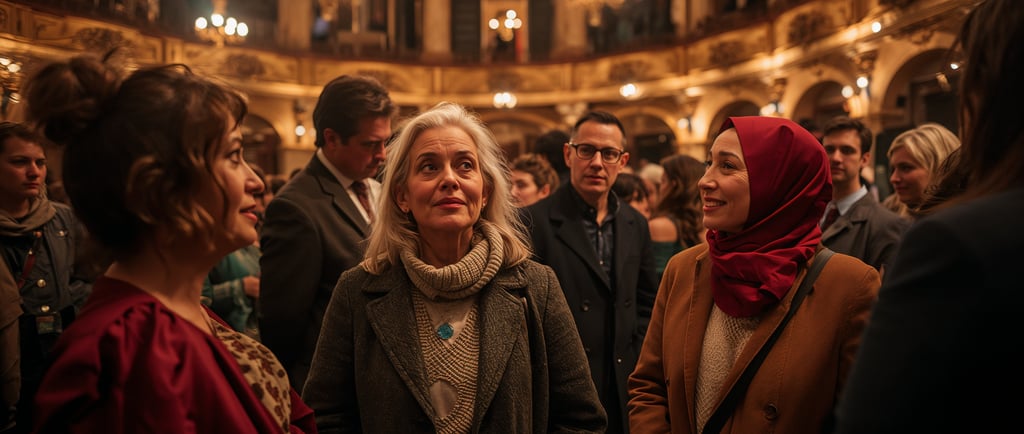
During these very divisive days in which many Americans feel that the only thing that matters is who is right or wrong, the arts offer an essential place for exploration and learning. Theater provides an opportunity for people to gather together, share laughter, experience quiet moments together, and respond emotionally as one. Ultimately theater proves that authentic dialogue starts with listening.
There has been research conducted regarding higher education that supports the significance of arts programs in promoting civic engagement and democratic participation.
Jacoby's (2019) Educating Students for Civic Engagement: What the Arts Have to Do With It article published in the Journal of College and Character demonstrates how engaging in art can contribute to enhanced social responsibility, community involvement, and citizenship. In her article she states that arts experiences enhance individuals’ capacity for empathy, critical thinking, and their awareness of their position in society.
Here is where you can read more: https://www.tandfonline.com/doi/abs/10.1080/2194587X.2019.1669467
For decades now, artists have known this: Stories define how we understand each other.
The Adult in the Room will not educate audiences as to what they should think. Rather, it will inspire them to think more profoundly.
After attending The Adult in the Room performances some attendees may have varying views about what occurred onstage. Some attendees may relate to the trials of leading. Others may ponder questions such as representation, perseverance, compromise, or public service. What matters most is that this discussion continues after leaving the theater.
The reason that theater continues to thrive in spite of technological advancements and changes in consumer behavior is because of the undeniable value of sharing a similar physical space with strangers and experiencing a story come alive before their eyes. This experience serves as a reminder that behind every issue exists a group of humans seeking understanding, meaning, and connection.
Once a show ends its final performance and the curtains close, the ideas generated from successful theater productions linger well after the lights fade away.
As audiences face increasing levels of difficulty in navigating their world around them, storytelling continues to be one of the most potent tools available to foster empathy, stimulate dialogue, and inspire contemplation.
The objective of political theater is not to provide all of the answers to questions.
Rather its goal is to provide an atmosphere for questioning the issues that matter most.
Ultimately, it is possible that it is in that common area between the stage and the audience where we find out that the most significant discussions are not necessarily centered on taking sides but rather finding out what it means to lead, to listen, and to be human.